Optimistic blogging during a crisis is possible

Make an influential difference

During the Covid-19 pandemic, bloggers must make an influential difference to their readers while remaining creative and interesting.

Has the lockdown increased imagination or lessened creativity? We did a little research on what the current situation is like for bloggers and how they are making a difference.

Advantage rather than setback

Among the many, many bloggers Tiannah Toyin Lawani and Sofiyat Ibrahim impressed us with their optimistic ways of using Covid-19 as an advantage rather than a setback.

But before we share their stories we have a look at the daily life of an influential blogger.

Blogging influencers strengthen communication and relations with followers. For this reason they have a conscious connection with the environment and want to positively pave the way for a better future. An influential blogger stays up to date with current affairs and shares sustainable, positive cultural content and activities.

Tiannah Toyin Lawani

As an illustration, fashion designer Tiannah Toyin Lawani from Lagos Nigeria started a glitter and rhinestone mask trend.  Returning home from a fabric buying spree in Istanbul, Tiannah noticed people staring at her surgical mask. At that moment she realised that if the mask matched her outfit, people wouldn’t stare but think ‘that’s fashion’.

Tiannah decided that protective gear could use more glamour. With the help of seven tailors living in her home in Lagos Tiannah’s designs, made to match ball gowns and bikinis are raising awareness and made it Lagos Fashion Week.

These unique designs are sought after items for Tiannah’s elite customers and social media followers. Recently, Omashola Kola Oburoh, a Big Brother Naija finalist sported a shimmery pinkish silver suit with three-dimensional fabric skulls on the chest and a matching face mask made by Tiannah which went viral when he shared it with his 756,000 Instagram followers.

Celebrity stylist, Tiannah and her team has received hundreds of orders and they’ve sent 1,000 free masks to charities. She is working hard with her tailors and managers who follow strict hand-washing schedules and regular dance breaks lift moods.

Sofiyat Ibrahim

Another Nigerian influencer is Sofiyat Ibrahim whose blog ‘The Odditty’ creates quirky and lovable content needed during quarantine.

The Odditty

The 22-year-old blogger, content creator and graduate student has created a bright spot on the internet during Covid-19. The Odditty reflects on the pervasiveness of influencer culture. It embraces online laughter with Sofiyat’s fun, upbeat, and genuine tactics. The Nigerian-born creator wants the world to know that she is extremely multifaceted. She is set to earn her masters in International Affairs and Peace and Conflict Studies soon and she hopes to use both her platform and her degree to support charity work in Nigeria and beyond.

The Odditty is a blog where readers can have lots of fun, it’s a place to escape.  The content resonates with people during the pandemic because it’s a welcomed distraction.  Distraction is exactly what Sofiyat gives followers, she helps them by sayinglook at me, rocking these dresses, acting a fool, look at me telling you to be confident.”  It’s a powerful space to make people laugh and realise it’s possible to exist in a space where you don’t drive yourself crazy worrying so much.  The blog captures people in the moment and shares an enjoyable engaging space for people looking for laughter.

Give back

However, Sofiyat plans to give a lot to charity and share her resources with people around the world. All proceeds from her first event, a ‘Nigerian Story Time’ went to the winner’s choice. She says “It’s little things like that where I’m getting this opportunity and I’m going to give it back.

The Odditty is an interesting space where you feel like you can be cool but really smart too!
Share this article

How are New Zealand emerging from the corona virus pandemic?

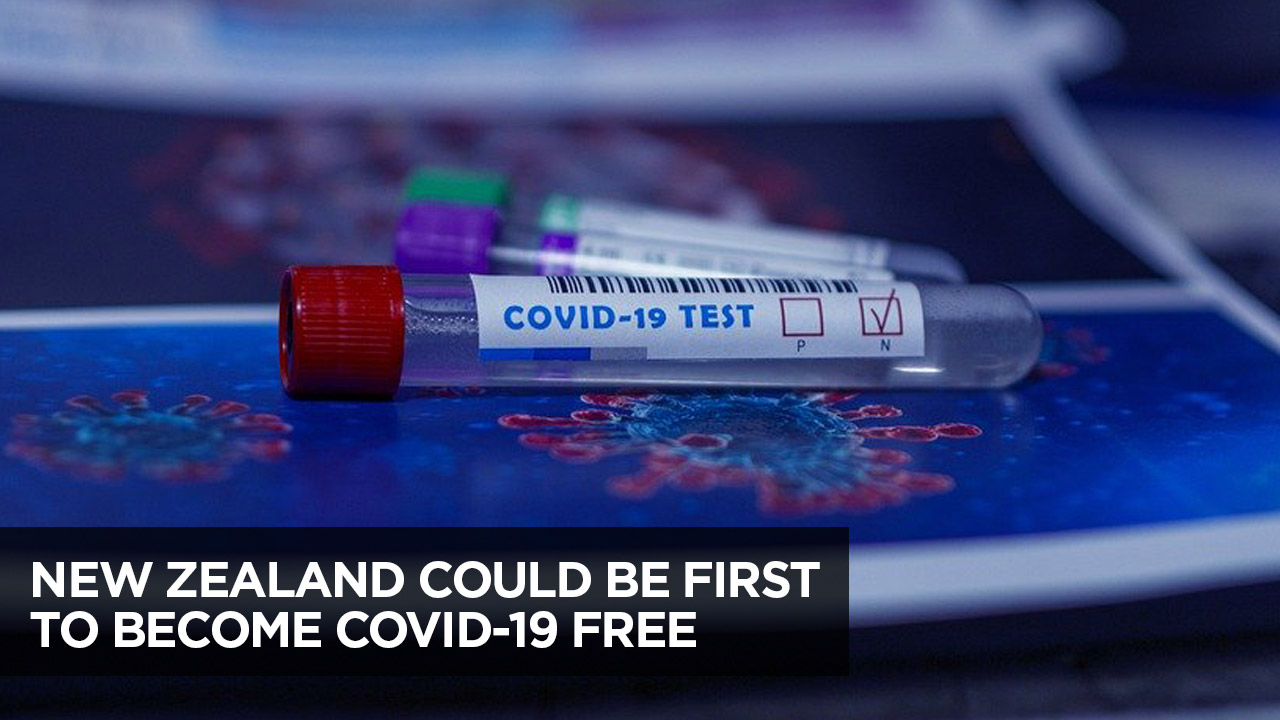
New Zealand could be first to become Covid-19 free

On Thursday 11th June 2020, local media in New Zealand reported that the country may become the first to successfully eliminate the novel coronavirus from its territory if no new case is detected in the next eight days.

No COVID-19 case has been reported in the country for 20 consecutive days, with the last one confirmed by officials on May 22. The report said New Zealand will officially be free of the virus if no cases are reported in the next week. Health officials say elimination is reached after 28 days, two incubation periods of no new infections.

‘…one of the first countries in the world…’

After weeks of lockdown, the prime minister of New Zealand Jacinda Ardern danced for joy when she announced restrictions were to be lifted as the country heads towards eliminating the coronavirus.  She announced that all social and economic restrictions except border controls were being lifted because New Zealand was free of the coronavirus, one of the first countries in the world to return to pre-pandemic normality. Public and private events, the retail and hospitality industries and all public transport were allowed to resume.

The prime minister thanked the five million people of New Zealand and said “While the job is not done, there is no denying this is a milestone, thank you, New Zealand. We are confident we have eliminated transmission of the virus in New Zealand for now, but elimination is not a point in time, it is a sustained effort.

New Zealand people are emerging from the pandemic after 75 days of restrictions which included about seven weeks of a strict lockdown in which most businesses were shut and everyone except essential workers had to stay home. Ardern vowed to eliminate, not merely contain, the virus, which meant stopping transmission for two weeks after the last known case was cleared.

Clear leadership and an engaged public

This news brings bright hope for the world, we believe clear leadership and an engaged public produced this result. The prime minister has received global praise for her leadership during the pandemic.

New Zealand had some advantages in tackling the virus; they had the benefit of time; their first case of coronavirus was confirmed on 28th February 2020, well over a month after the United States confirmed its first case. But the real key to New Zealand’s success appears to be an approach that could be applied anywhere; moving swiftly, testing widely, and relying heavily on good science.

Moving swiftly

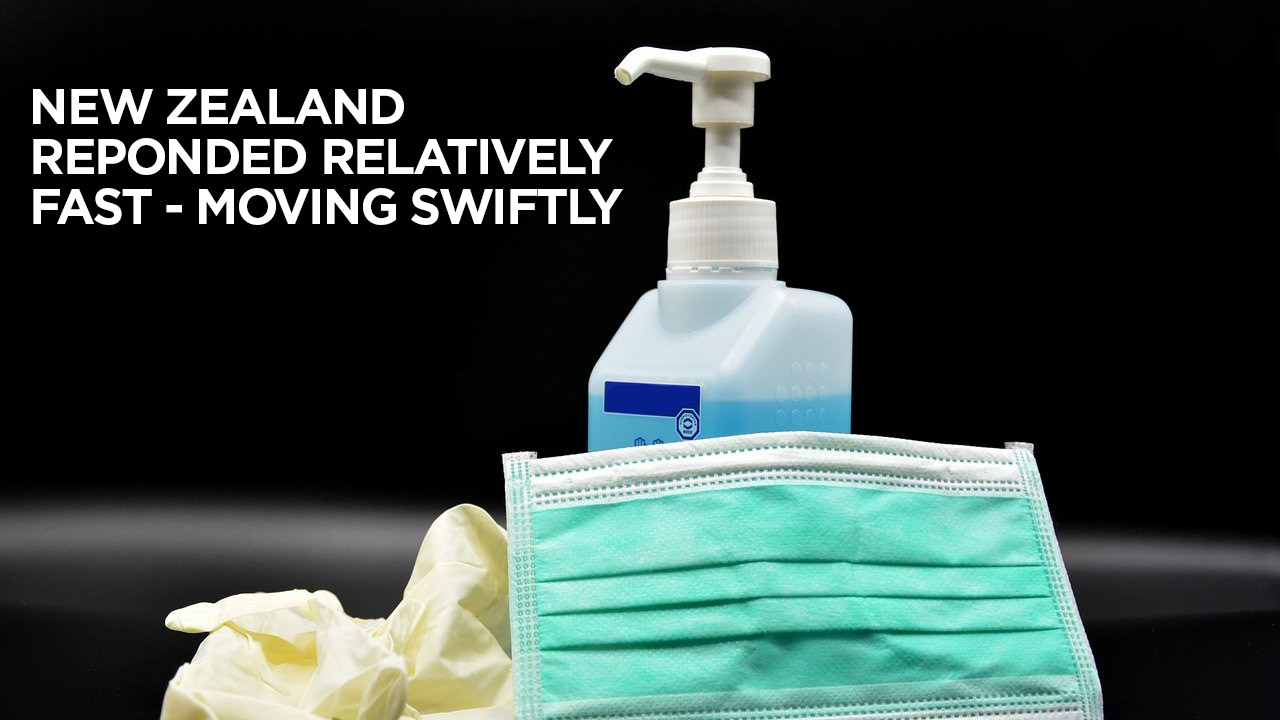
Like many countries, New Zealand had models that showed that a potential coronavirus outbreak could be devastating if no action was taken. New Zealand responded relatively fast.

On 14th March 2020 anyone entering the country had to self-isolate for two weeks, it was among the toughest border restrictions in the world. At the time, the country had six cases.

On 19th March 2020 all foreigners were banned from entering the country, there were 28 confirmed cases.

On 23rd March 2020 New Zealand announced that the country was going into lockdown, there were 102 confirmed cases and no deaths.  Non-essential businesses were closed, events and gatherings cancelled and schools closed to all children except those of essential workers. Employers were told to allow working from home where possible, public transport was reserved for essential workers, and discretionary domestic air travel between regions was banned.

Strictest level of lockdown

At midnight on 25th March 2020, New Zealand moved to the strictest level of lockdown, with people being told not to leave home except for essential exercise near the home, while maintaining social distancing.

On 9th April 2020, despite a decline in cases, New Zealand tightened border restrictions so that all citizens and permanent residents arriving in New Zealand were required to spend two weeks quarantined in an approved facility rather than at home.

‘…decisive action…’

Decisive action, going hard and going early, helped to stamp out the worst of the virus.  This strong action was taken for a few reasons.  New Zealand is a key departure route to Pacific Islands and the country has a responsibility to protect its Pacific neighbours and swift actions were taken for the benefit of New Zealanders.

Testing widely

New Zealand ramped up its testing, to the point that they could carry out up to 8,000 tests per day.  To date, New Zealand carried out 424,719 tests.  The real sign that New Zealand’s testing worked is its test positivity rate. A good benchmark is to have at least 10 negative cases for every one positive case confirmed. This means if a state or country carries out testing and comes back with positive cases of around 9% or under, then it’s likely that it is testing well.

‘…one of the highest testing capacities in the world…’

New Zealand’s test positivity rate was around 1%, suggesting that there wasn’t widespread community transmissions slipping under the radar. It was noted in other countries around the world that each person infected with coronavirus infects around 2.5 people. Under New Zealand’s lockdown, that dropped to 0.4, less than half a person infected.  New Zealand now has one of the highest testing capacities in the world.

Relying on good science

In New Zealand, success has been a wonderful link between good science, and brilliant leadership, and the two together are I think really highly effective,” said Professor Michael Baker, from Otago University’s Public Health Department who throughout the lockdown period, appeared at regular press conferences alongside the president.

The future

Although New Zealand is seen as a success story of the coronavirus crisis, the prime minister has pointed out that the battle against Covid-19 would continue until there is a vaccine.

The one new case

Unfortunately on Monday 6th July the county reported one new case of COVID-19.  The case is a man in his 20s who arrived in New Zealand from London on 4th July via Doha and Sydney. The man was taken straight from Auckland Airport to the quarantine facility as he had symptoms of COVID-19 upon arrival. The Public Health Unit will be interviewing the man to find out more details.

Share this article

Domestic flights to resume in Nigeria

We are thrilled by the news that domestic flights is to resume in Nigeria. The government of Nigerian has approved the reopening of domestic flights; resumption will be in line with existing international and local Covid-19 guidelines.

Domestic Flights to resume in Nigeria

Chairman of the Presidential Task Force announcement

Boss Mustapha, Chairman of the Presidential Task Force (PTF) on COVID-19, made this announcement at its bi-weekly briefing on Monday. Unfortunately the resumption of flight operations will come with an increase in airfares.

Mustapha explained that the increase of products and services was not peculiar to the aviation sector. “Prices of things have surged since the coronavirus outbreak; prices have increased generally. The prices of things prior to COVID-19 is different from what it used to be. Even in the market, things have increased. That is the difficult thing that is going to confront us as a people and because of the protocols that are going to be introduced in the whole aviation business, you will definitely expect an increase in the prices,” explained Mustapha.

Testing airport facilities

In order to reduce the spread of Covid-19, Nigeria shut its airports, except for essential flights, in March.  The PTF originally announced that some domestic flights would resume on 21st June but the aviation ministry said it needed more time to prepare. On Saturday the ministry conducted a test run of airports facilities to determine their readiness for the resumption of domestic flight operations.

Mustapha said the Federal Airports Authority of Nigeria (FAAN) has already increased its customer service fares by hundred per cent.  He said this review in fare is expected in government institutions responsible for managing the aviation industry.

FAAN has already increased its customer service fare by one hundred per cent. It used to be a thousand naira for customer service but I think it has increased to N2000 and that is even before the operation starts. So, it is not only the airlines.

Even government institutions who have the responsibility of managing the aviation industry will review their charges because that is the nature of what COVID-19 has thrust on the people of the country and all over the world.

Social Distancing has an influence on airfare increase

He also said that social distancing measures also have an influence on the airfare increase. “There is also going to be the maintenance of social distancing in aircrafts. If an aircraft has a capacity of 150 people, they might now be restricted to about a 100 or 75 passengers. Flying comes with a component of costs. Aviation fuel is one, salaries for the pilots, services that are paid for to the aviation industry institutions are also things to consider. Every time you see a plane take off, there is an attendant cost to that. Who will bear the cost? It will be shared; the passengers will take part of it and the business owners will also take part in the cost and you know that nobody runs a business at a loss.

The PTF chairman said the federal government will assist the aviation industry “at a time the world is fighting this pandemic. I believe that the aviation industry is one of the industries that is hard hit by this COVID-19 because it is an industry that is designed for moving people up and down and for the last three months, they have not been able to do anything.

Approved extension of phased lockdown

Mustapha also said that President Muhammadu Buhari approved the extension of the phased lockdown for four weeks, meaning the 10pm to 4am nationwide curfew restrictions on mass gatherings and sporting activities will continue. Nigeria’s mandate for face masks in public places remains in effect.

Members of the Covid-19 taskforce did an inspection tour of the Murtala Muhammed Airport in Lagos and Nnamdi Azikiwe International Airport in Abuja and expressed satisfaction with the level of preparedness for their reopening.

‘…automatic temperature screening points…’

Shortly after inspecting the Abuja Airport, members of the Taskforce on COVID-19 arrived at the Lagos Airport aboard an Aero Contractor’s test flight to assess the level of preparedness at the General Aviation Terminal. They inspected both the departure and arrival areas of the airports to assess the social distancing measures put in place. The boarding and waiting areas were clearly marked for passengers to observe social distancing, while the toilets have automatic hand washing points.  In addition, automatic sanitizer dispensers were provided at every point of boarding and there are automatic temperature screening points.

Murtala Muhammed Airport Lagos

Lagos and Abuja Airports

The committee confirmed Lagos and Abuja airports 90 to 95 per cent satisfactory with what they have on ground and the only thing left to be done at the airport was the surface cleaning and installation of baggage spray machines which are confirmed to be ready.  In conclusion the monitoring team expressed satisfaction with the level of preparation by the aviation sector to restart, saying the stakeholders have done very well.

Feel free to contact us should you have any questions regarding traveling with VIP Express Tourism Limited.

Share this article