Flattening the Curve: COVID-19

As of 2nd April 2020, lessons from Taiwan, Canada, South Korea and Georgia show that the coronavirus can be slowed down. Taiwan and South Korea have been signalled as relative success stories for flattening the curve before infection rates soared.

Flattening the curve does not necessarily mean seeing a decrease in total cases right away; it would first produce a decline in the number of new cases, which should result in fewer hospitalizations and death in the weeks that follow.  By flattening the curve, officials hope to ensure that the health care system doesn’t become overwhelmed and unable to help those who need it

Early response to crisis
Taiwan recorded its first case of the coronavirus on Jan. 21, but managed to keep its number of confirmed cases to 329 with five deaths. As soon as news broke about a mysterious illness in Wuhan, Taiwan, which is 100 miles from mainland China, began inspecting travellers coming from the city on 31st December.

“. . . a system to track those in self-quarantine . . . ”

They set up a system to track those in self-quarantine, and ramped up production of medical equipment in January. They attribute their ‘flattening of the curve’ to an early and effective response to the crisis.

Brilliant infrastructure
Canada managed to roll out an expansive infrastructure to conduct tests and contact tracing. Canada has a well-funded public health care system, and its criteria for who can be tested for COVID-19 is their attributes to ‘flattening of the curve’.  Catching cases early, and investigating their origins helped Canada to manage the virus.

Success without lockdowns
South Korea, which had one of the largest initial outbreaks outside China, also managed to slow the spread of new coronavirus cases without instituting any lockdowns. The country’s exemplary model for mass diagnostic testing was the only way to contain the outbreak.

“. . . model that pays of . . . ”

South Korea, with a population of 51 million, tests more than 20,000 people daily at designated testing sites and uses isolation and widespread contact tracing to break chains of transmission. They attribute their ‘flattening of the curve’ to using recommendations from the World Health Organisations’ model that pays off in reducing the spread.

Big success in small Georgia
The early response of the country of Georgia, despite its small size and struggling economy is their credit to ‘flattening the curve’. They began taking serious measures at the end of February, including closing schools and conducting widespread diagnostic tests. Georgia has so far confirmed 117 cases and no deaths from COVID-19.
A drop in daily cases for two consecutive days
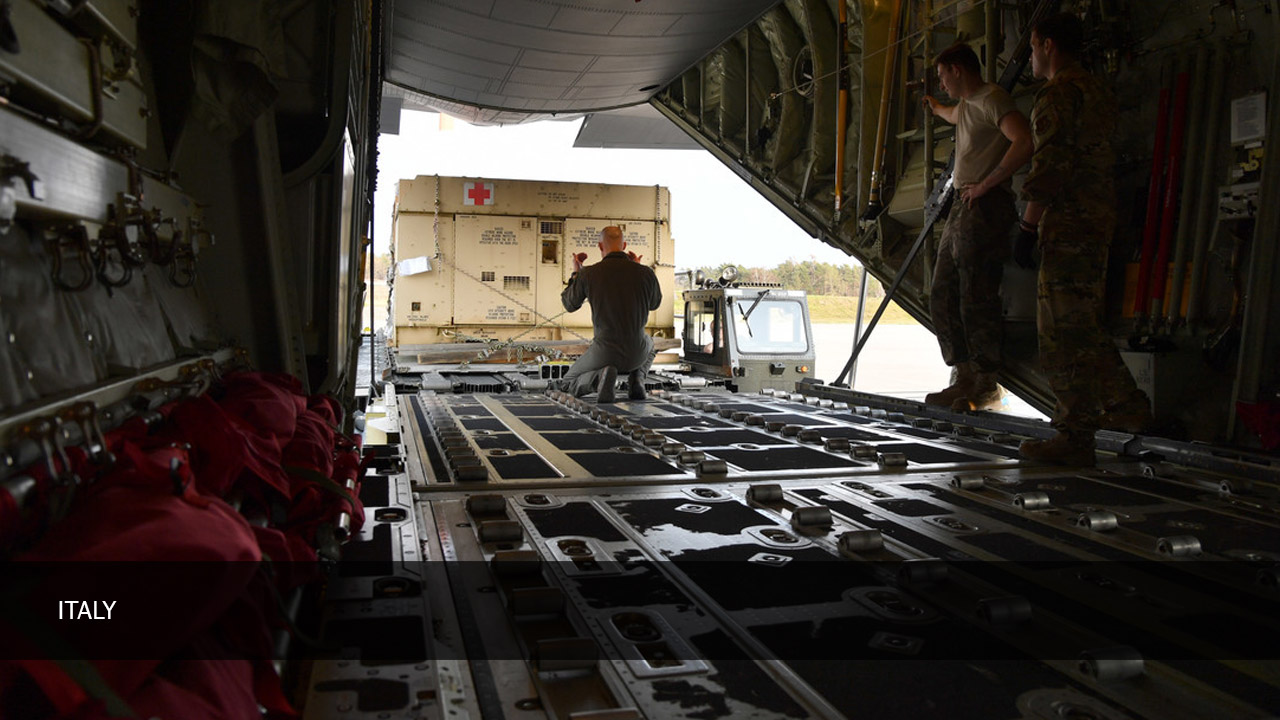
Italy has been under a nationwide lockdown for about four weeks and has begun to flatten the curve. Italy hit its apparent peak in daily cases on March 20, with more than 6,000 new cases that day. On March 29 and 30, Italy saw a drop in daily cases for two consecutive days.  Since then, the number of daily cases has stayed between 4,000 and about 4,800. When looking at the growth of the virus over time in Italy, it appears the curve is flattening.

 “. . . appears the curve is flattening . . .

Spain is starting to flatten the curve
Spain has been in lockdown since March 15, they have more confirmed cases than Italy, with over 135,000. A peak in daily cases occurred on the March 24, with more than 9,000 cases reported that day. However, the daily increase has continued to drop in recent days. Starting on April 1, Spain saw a drop in daily cases for four consecutive days.

“. . . drop in daily cases for four consecutive days . . .

Efforts in France are actually working
France has been in lockdown since March 17The growth of the virus has been steady, except for a spike on April 3, which could have been caused by new reporting measures. Last week, the country also saw a spike in deaths after the health ministry began including nursing home fatalities in its data. After April 3, the number of daily cases dropped substantially, with just about 3,000 new cases on April 4. If this steady number of daily cases continues, the country will flatten its curve. 

Share this article

Humanity Comes Together for Vaccine

Developing a vaccine or a treatment for a newly discovered virus is a slow and detailed endeavour. The coronavirus has changed that. From Asia to Europe, North America, and Africa, infectious disease experts are trialling vaccines, developing new tests for the virus or devising innovative public health strategies to control the outbreak.  A global race to search for a coronavirus vaccine is underway.  We take a look at a few countries working flat-out to save us from the pandemic.

China
In China, where doctors and scientists played pivotal roles in alerting the world about what would come to be called Covid-19, few deserve more credit for sounding the alarm than Ai Fen, head of the emergency department at Wuhan Central Hospital. On 30th December, she received a lab report on a patient with unexplained pneumonia. She immediately notified her superiors and began warning fellow doctors to take precautions, she sent screenshots of the report to her old medical school classmates. While Ai was putting fellow doctors on alert, researchers in Shanghai led by Zhang Yongzhen were studying a specimen from a patient from Wuhan with an unexplained fever. Zhang’s team concluded the specimen was a novel coronavirus.

” . . . from around the world
pounced on the puzzle.”

With this release, infectious disease experts from around the world pounced on the puzzle in a rush to understand how quickly this new virus might spread.

Britain
In Britain, as soon as the Shanghai scientists released the genetic sequence for the virus, several researchers responded to a call from the World Health Organization to propose methodologies for developing vaccines. Researchers are working around the clock to develop plans to eliminate the coronavirus.

United States of America
In the United States, scientists are closely watching clinical trials led by Andre Kalil, a physician specializing in pneumonia. The trial, with more than 100 patients at dozens of hospitals, will yield initial results in a week or so. As soon as Kalil saw the reports about coronavirus in China, he and his team began investigating potential therapies and offering real science trials.

Senegal
In Senegal, an infectious disease expert Mr Sall began hearing about the mysterious pneumonia in China.  Sall has been working 18-hour days with colleagues from across Africa since 27 February when he heard Nigeria confirmed the first case in sub-Saharan Africa and four days later when Senegal reported its first infection.

“results in 10 minutes”

With a partner in Britain, Sall is developing a test for Covid-19 that can yield results in as little as 10 minutes.

Singapore
In Singapore, coronavirus testing is among the most aggressive. As of last week, Singapore had conducted more than 39,000 tests. Singapore can administer more than 2,000 tests daily and is working to expand that. Patients who show symptoms are quarantined before they transmit the disease. Singapore’s tactic of aggressively testing while tracing and isolating has worked because they have a dedicated place to quarantine patients.

Recovery from Covid-19
What the world has observed is that the vast majority of people who catch Covid-19 will make a complete recovery; 184,965 people have recovered globally from the coronavirus (as at 1 April 2020).

Share this article

Ways to stay optimistic during the corona virus pandemic.

The corona virus anxiety is real; during this unpredictable time, we need to stay in an optimistic emotional state of mind.  Here are some ways people are caring for one another while staying safe as families, friends, colleagues and neighbours.

Practice random acts of kindness
Your kindness doesn’t require a monetary value, send an inspirational email or social media message to friends, family and colleagues.

Share positive news . . .
and acts of kindness on social media, this can prevent us from getting caught in a bad news hopelessness spiral.

Exercise
Exercise regularly, get some fresh air, eat a well-balanced diet, get sufficient sleep and make time for self-care.

Boost your immune system
And keep your body functioning optimally; this will help you feel good. When you feel good, strong and healthy, you’ll find you’re better able to cope with whatever is taking place around you.

The elderly
Check on elderly neighbours, although necessary, social isolation can be lonely. Text, phone call or email them especially if they live alone.

Watch a funny video
Thanks to social media there are thousands of videos online that can help you take your mind off current events when you feel gloomy, if only for three minutes at a time.

Misinformation
Fight misinformation online, unfortunately misinformation on COVID-19 is floating around online. If you see it, report it and let anyone posting or sharing know (via private message or commenting on the post). Get your information from trusted sources like the World Health Organisation.

News
Take control of the type and amount of news you consume, allow yourself to watch or read the news once or twice a day at the most. Give your brain time to rest and avoid overthinking what you have watched or read. Watch other shows besides the news.

Look after yourself . . . 
to look after us all, if we all do our best to stop the spread, we can flatten the curve! Use simple social distancing tactics like replacing hugs and handshakes with alternatives such as a wave or nod of the head.

Anxiety
Try not to worry, needless worrying is a waste of energy; it causes anxiety, and anxiety is not good for the immune system. It’s also useful to remember that you’re not in this alone, we are dealing with this as a community, as a country and as one world. Draw strength from your loved ones, and in turn, try to be strong and stay positive for them. There is certainly light at the end of the tunnel.

Reflection
Take a daily inventory. Close your day, every day, with a positive acknowledgement of something you accomplished, learned or are grateful for. It will help dilute some of the negativity you’ve absorbed through the day.

Improve yourself
Use this time to improve your skills, there are hundreds of online courses from top universities and specialist organisations where you can learn. Take advantage of technology by searching for these courses and earn valuable credentials.

Attitude of gratitude
Practice living with an attitude of gratitude; be grateful for everything in life, there is nothing too small to be grateful for even it’s the weather. Share feelings of gratitude by expressing gratitude to those you care about; not only will this make their day a little brighter, it will do wonders for your happiness too.

Discipline
Remain disciplined if you are working from home. Keep on track and stay focused by defining your specific workspace and having a workday schedule that you stick to. To avoid burnout, plan and take breaks throughout the day; this includes taking care of yourself by doing something you enjoy.

Share this article