 As of 2nd April 2020, lessons from Taiwan, Canada, South Korea and Georgia show that the coronavirus can be slowed down. Taiwan and South Korea have been signalled as relative success stories for flattening the curve before infection rates soared.
Flattening the curve does not necessarily mean seeing a decrease in total cases right away; it would first produce a decline in the number of new cases, which should result in fewer hospitalizations and death in the weeks that follow. By flattening the curve, officials hope to ensure that the health care system doesn’t become overwhelmed and unable to help those who need it
Early response to crisis
Taiwan recorded its first case of the coronavirus on Jan. 21, but managed to keep its number of confirmed cases to 329 with five deaths. As soon as news broke about a mysterious illness in Wuhan, Taiwan, which is 100 miles from mainland China, began inspecting travellers coming from the city on 31st December.
“. . . a system to track those in self-quarantine . . . ”
They set up a system to track those in self-quarantine, and ramped up production of medical equipment in January. They attribute their ‘flattening of the curve’ to an early and effective response to the crisis.

Brilliant infrastructure
Canada managed to roll out an expansive infrastructure to conduct tests and contact tracing. Canada has a well-funded public health care system, and its criteria for who can be tested for COVID-19 is their attributes to ‘flattening of the curve’. Catching cases early, and investigating their origins helped Canada to manage the virus.

Success without lockdowns
South Korea, which had one of the largest initial outbreaks outside China, also managed to slow the spread of new coronavirus cases without instituting any lockdowns. The country’s exemplary model for mass diagnostic testing was the only way to contain the outbreak.
“. . . model that pays of . . . ”
South Korea, with a population of 51 million, tests more than 20,000 people daily at designated testing sites and uses isolation and widespread contact tracing to break chains of transmission. They attribute their ‘flattening of the curve’ to using recommendations from the World Health Organisations’ model that pays off in reducing the spread.
Big success in small Georgia
The early response of the country of Georgia, despite its small size and struggling economy is their credit to ‘flattening the curve’. They began taking serious measures at the end of February, including closing schools and conducting widespread diagnostic tests. Georgia has so far confirmed 117 cases and no deaths from COVID-19.
A drop in daily cases for two consecutive days
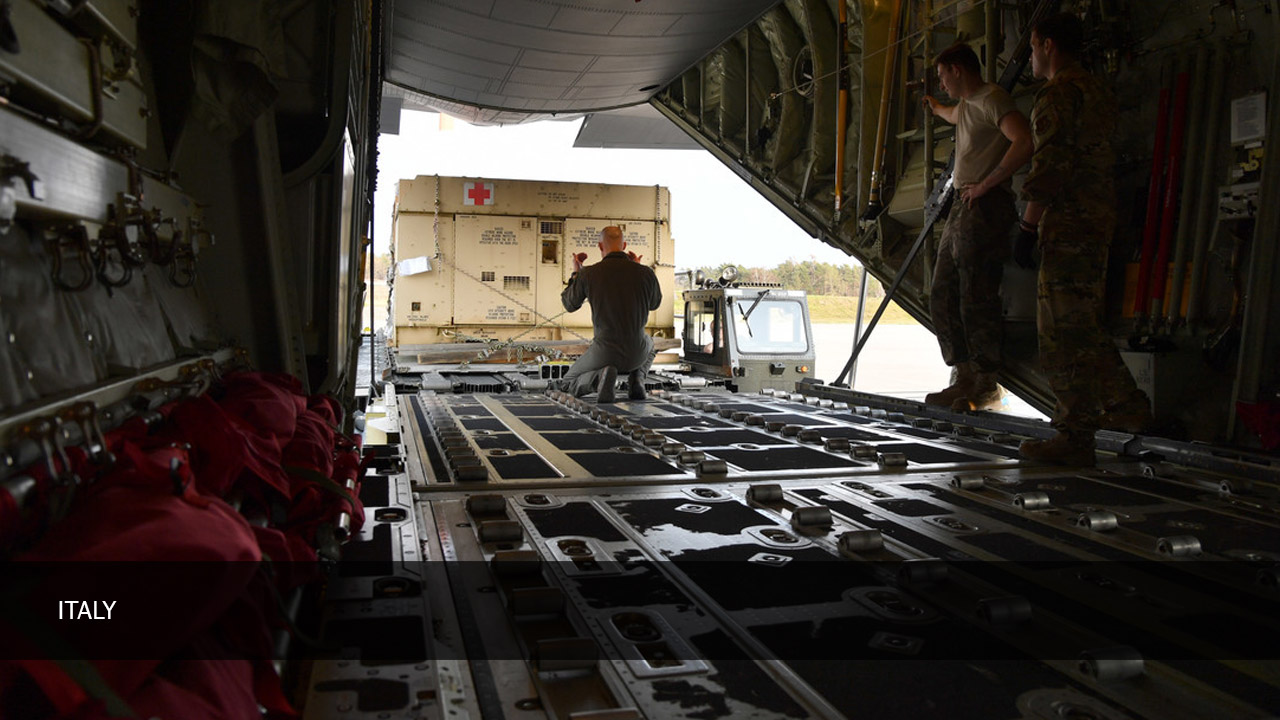
Italy has been under a nationwide lockdown for about four weeks and has begun to flatten the curve. Italy hit its apparent peak in daily cases on March 20, with more than 6,000 new cases that day. On March 29 and 30, Italy saw a drop in daily cases for two consecutive days. Since then, the number of daily cases has stayed between 4,000 and about 4,800. When looking at the growth of the virus over time in Italy, it appears the curve is flattening.
“. . . appears the curve is flattening . . .

Spain is starting to flatten the curve
Spain has been in lockdown since March 15, they have more confirmed cases than Italy, with over 135,000. A peak in daily cases occurred on the March 24, with more than 9,000 cases reported that day. However, the daily increase has continued to drop in recent days. Starting on April 1, Spain saw a drop in daily cases for four consecutive days.
“. . . drop in daily cases for four consecutive days . . .
Efforts in France are actually working
France has been in lockdown since March 17. The growth of the virus has been steady, except for a spike on April 3, which could have been caused by new reporting measures. Last week, the country also saw a spike in deaths after the health ministry began including nursing home fatalities in its data. After April 3, the number of daily cases dropped substantially, with just about 3,000 new cases on April 4. If this steady number of daily cases continues, the country will flatten its curve.





 Developing a vaccine or a treatment for a newly discovered virus is a slow and detailed endeavour. The coronavirus has changed that. From Asia to Europe, North America, and Africa, infectious disease experts are trialling vaccines, developing new tests for the virus or devising innovative public health strategies to control the outbreak. A global race to search for a coronavirus vaccine is underway. We take a look at a few countries working flat-out to save us from the pandemic.